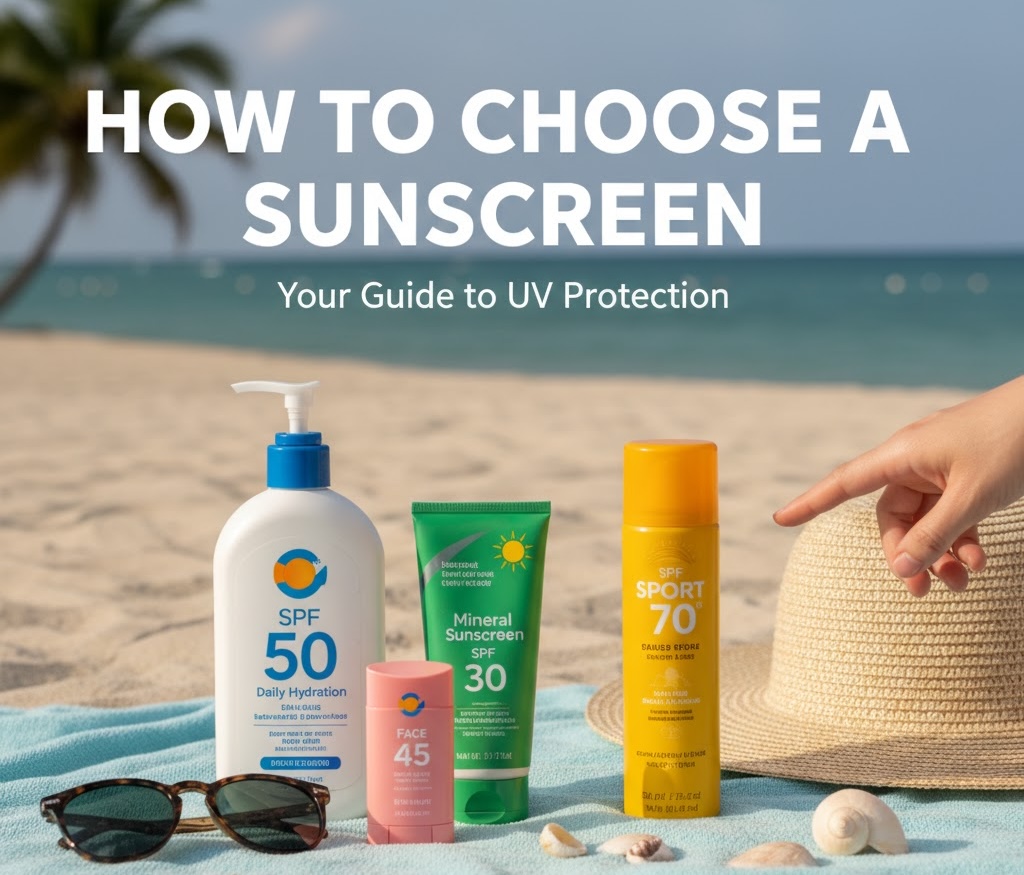
How to Choose the Perfect Sunscreen for Your Skin
Sunscreen is a daily shield for your skin — not just for the beach, but for every single day. Whether it’s cloudy, rainy, or you’re indoors, UV rays still reach your skin and cause tanning, pigmentation, and premature ageing. Let’s decode how to pick the right sunscreen for your skin type with the help from our dermatologists at DermaCurious
Step 1: Understanding SPF — Your UVB Protection
SPF (Sun Protection Factor) indicates how well a sunscreen protects you from UVB rays, the ones responsible for sunburns.
- SPF 15: Blocks ~93% of UVB rays
- SPF 30: Blocks ~97%
- SPF 50: Blocks ~98%
Our dermatologists at DermaCurious recommend choosing a sunscreen with SPF 30 or higher for Indian skin types.
💡 Apply sunscreen 20 minutes before stepping out and reapply every 3–4 hours — even if you’re indoors or it’s cloudy.
Step 2: Decoding the PA Factor — Your UVA Protection
Ever noticed the “PA+++” label on sunscreen? That’s your UVA protection grade — UVA rays cause tanning, wrinkles, and pigmentation.
Here’s what the “+” means:
- PA+ → Some UVA protection
- PA++ → Moderate protection
- PA+++ → High protection
- PA++++ → Very strong protection
👉 If you’re prone to pigmentation, always go for PA+++ or PA++++ sunscreen.
SPF vs PA — Which One Is More Important?
Both! SPF protects against sunburn (UVB), and PA protects against pigmentation (UVA).
For complete protection, DermaCurious dermatologists recommend a broad-spectrum sunscreen that covers both UVA and UVB.
Step 3: Finally, Choosing Sunscreen Based on Your Skin Type
For Oily or Acne-Prone Skin
- Go for gel-based or water-based formulas
- Look for oil-free, non-comedogenic, matte-finish sunscreens
- Ingredients like niacinamide help control oil and soothe acne-prone skin
For Dry Skin
- Pick cream-based or lotion sunscreens
- Look for hydrating ingredients like hyaluronic acid and ceramides
- Avoid alcohol-heavy formulas that can dry out skin
For Combination Skin
- Choose lightweight gel or fluid-based sunscreens
- Ensure it’s mattifying for oily zones and hydrating for dry patches
For Sensitive Skin
- Use mineral or physical sunscreens with zinc oxide or titanium dioxide
- Always go for fragrance-free, hypoallergenic formulas
- Avoid irritants like oxybenzone and avobenzone
Still Not Sure Which Sunscreen Suits You?
📸 Share a snap of your skin and your daily sun exposure details at dermacurious.in, and our dermatologists will personally recommend the perfect sunscreen for you.
Top Sunscreen questions answered:
-
Does sunscreen go bad after sitting in the sun? Leaving your sunscreen out in the direct sun for an extended period can have a negative effect on the formula’s stability. To keep your SPF in a good condition, especially on beach days, it is recommended to protect the sunscreen by wrapping it in a towel or storing it in shade
-
Does sunscreen expire? Yes, Sunscreens have an expiry date too! They typically last up to three years. Always check the expiration date before using sunscreen
-
How often should sunscreen be reapplied? Every two hours, or more often if swimming, sweating, or towel drying.
-
Can sunscreen prevent tanning? A well-formulated sunscreen will prevent tanning or the deepening of skin’s colour as it works to shield skin from the harmful rays responsible for triggering that response. One of the biggest mistakes that most people make is not applying/reapplying sunscreen liberally enough to achieve adequate protection.
-
Do you need sunscreen if you have sun protection clothing?** Sun protection clothing from reputable brands will shield against both UVA and UVB rays in the areas of skin that it covers, so no sunscreen is necessary underneath the clothed area. However, any areas of skin that are left exposed to the sun still need sunscreen.
-
Can sunscreen cause acne? Sunscreen does not cause acne, but if the formula used has a thick, heavy, pore-clogging consistency or if you don’t wash it off properly at night, there’s a chance you could break out from it. For blemish-prone skin, lighter weight, non-greasy, fluid sunscreen formulas are a great option. At night, remove the sunscreen with a gentle yet thorough cleanser.
-
When can a baby use sunscreen? For babies under 6 months, our pediatrician Dr. G. Durga Padmaja recommends sun protective clothing and seeking shade whenever possible. When sun avoidance isn’t an option, using mineral based (zinc oxide or titanium dioxide) sunscreen on exposed areas of skin such as the face and hands is recommended. For babies 6 months and older, regular sunscreen application is advised. But always, consult your child’s pediatrician and follow their advice. “Never spray sunscreen onto your child’s face directly due to inhalation risk; instead, spray the sunscreen onto your hands and pat onto the child’s face,” cautions Dr. Padmaja.
-
Does sunscreen block vitamin D? While it’s true that sunscreen inhibits exposure to UVB rays that trigger vitamin D production in skin, research shows foregoing sunscreen to get more vitamin D is never the answer. Sunscreen’s effect on vitamin D levels is considered minimal for most people, and ironically, skipping sunscreen and getting a tan can inhibit vitamin D in its own way. If you’re concerned about vitamin D deficiency, there are far more effective ways to get this nutrient, which your doctor can discuss with you. Our dermatologist Dr. C.H. Vasavi Latha adds, “Vitamin D can be obtained through diet - through fortified dairy products, egg yolks, cheese, seafood, and more.”
💬 Follow @dermacurious For more dermatologist-backed skincare tips, myth-busting facts, and quick skin hacks — follow us on Instagram @dermacurious
Disclaimer: This article is for educational purposes only and should not replace professional medical advice. Always consult with a qualified healthcare provider for diagnosis and treatment recommendations.